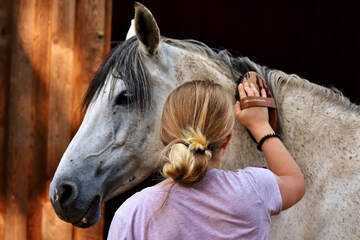
 So what is “equine therapy” anyway? To get a basic primer, you can start with Part 1. In light of recent changes, we've decided to write Part 2. The industry leader, the Professional Association of Therapeutic Horsemanship (PATH) International, is currently working on revising terminology and definitions for the field so some of the specific terms used in this post are subject to change. This blog post will specifically address the use of the term "therapy" and the difference between therapy services and therapeutic activities as currently defined by PATH Intl. On June 6, 2019, PATH Intl. released a statement regarding use of the term “therapy” in describing and advertising programs for equine assisted activities and therapies (EAAT). In the spirit of greater transparency and more accurate representation of services within the field of EAAT, PATH Intl. stated that only programs providing services recognized as therapy by the medical community and facilitated by licensed healthcare providers may use the term “therapy” when describing their programs and activities. This distinction is crucial in order to understand what types of services are out there and how to decide which type of service will best meet your (or your client's) needs. So what does this mean for the consumer? Well, here are a few questions to ask to figure what the best service is for you and how to find someone who can provide it. Questions to Ask Yourself:
Questions to Ask a Potential Provider:
Here's a quick snapshot of the different types of activities versus therapies and what you can expect from each:
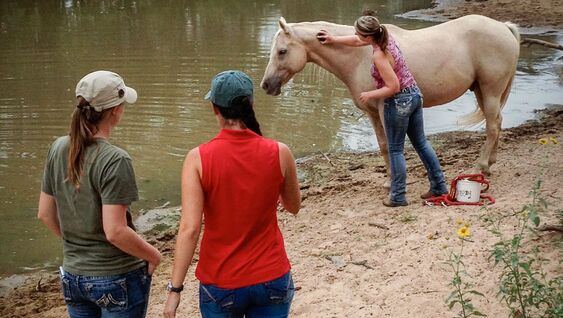 *It is important to verify a riding instructor's or equine specialist's credentials and qualifications. We recommend professionals who have received training through PATH Intl. as they are required to learn and abide by a set of comprehensive safety and ethical standards. PATH Intl.- certified professionals should be able to demonstrate documentation showing their certification is current. **It is important to verify that the individual who is advertising himself or herself as a therapist has been licensed by their state to practice therapy. Every state should have a database (or other method) to verify a therapist's license. In Texas, you can verify an individual's license by conducting an online license search. You can also request to see any licensed provider's state-issued license for their profession. For equine assisted counseling/psychotherapy, it is also important to note that just because someone is a licensed healthcare provider does not mean that they are qualified to practice counseling or psychotherapy. The therapist must have received clinical training and be governed by a board that oversees their practice of psychotherapy. Basically, if the therapist would not be considered qualified (or licensed) to practice psychotherapy in an office-setting, they are not qualified to practice with equines either. If you want to know more or have questions about a specific service, please don't hesitate to reach out to us. We would be happy to help you find a service that is the right fit for your needs whether that is Equine Connection Counseling or another of our community partners. Dr. Hallie Sheade is a Licensed Professional Counselor and Founder of Equine Connection Counseling. She is a PATH Intl. Certified Therapeutic Riding Instructor (CTRI) and a certified Equine Specialist in Mental Health and Learning (ESMHL). Dr. Hallie is the Founder of PATH Intl. Member Center, S.T.E.P.S. With Horses. She is a PATH Intl. Faculty Candidate for ESMHL workshops and a committee member on PATH Intl.’s Health and Education Advisory Committee. She is devoted to furthering the field and has served as invited panelist for PATH Intl. conferences and been selected to give 11 peer-reviewed PATH Intl. conference presentations.
29 Comments
|
Dr. Hallie Sheade is a Licensed Professional Counselor and Founder of Equine Connection Counseling. She is contracted to write a textbook on best practices in equine assisted counseling for Routledge, an academic publisher. Archives
October 2019
Categories
All
|

 RSS Feed
© 2026 Equine Connection Counseling, PLLC. All rights reserved. |
Contact Us
Phone: (682) 334-3784 Email: [email protected] Mailing Address: P.O. Box 122692, Fort Worth, TX 76126 |